What is heuristics ? Key Definitions and 10 biased examples people use without any data
/
What is heuristics ? Fancy word people tend to use but i found not all of them know what is it. Heuristics are simple, practical mental shortcuts that help us to make decisions, solve problems and form judgments. Often without any data or with limited information, little analysis, lack of formal reasoning.
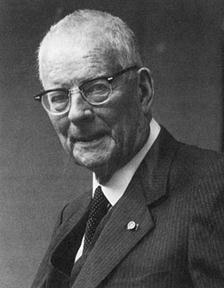
“Without data, you’re just another person with an opinion.”, ”In god we trus. All others must bring data.” — W. Edwards Deming
Every one has one.
Think about a stereoptype. Steoretypes are heruistics. Stereotype -> heuristic i.ex big glasses -> good at math. They’re not guaranteed to be correct or optimal, but they’re fast and usually “good enough” for everyday use. As a species we tent to simplify so we can use as little energy as possible. Double edged sword if You ask me. We all know how a fast delivery in a short sprint can look good know and make problems later.
The word heuristic comes from the Greek heuriskein, meaning “to discover.” There are several overlapping definitions.
1. General Definition
A heuristic is a practical approach to problem-solving or decision-making that isn’t guaranteed to be optimal or accurate, but is fast and useful in practice.
2. Dictionary definition (Merriam-Webster)
A heuristic is:
Involving or serving as an aid to learning, discovery, or problem-solving by experimental and especially trial-and-error methods.
Of or relating to exploratory problem-solving techniques that use self-educating methods (like evaluating feedback) to improve performance.
A heuristic method or procedure: a process that involves learning, discovery, or problem-solving by trial-and-error.
In computing, a heuristic can be a program that uses rules of thumb instead of exact algorithms to find “reasonably good” solutions quickly. Example – antyvirus checks if application wants access to files that should not be accessed.
3. Psychology / behaviral economics
In psychology, heuristics are simple if-then rules or norms that people use to make fast judgments, especially under uncertainty or time pressure.
They’re can be unconscious and automatic, and they can lead to systematic biases one should be aware but doesn`t have to be.
Key idea: heuristics are fast, frugal, and often biased, while algorithms are slow, careful, and more accurate but not practical every time.
Why do we use heuristics ?
Since they are not the best way to do something why do we do it ? The best i can say is “this is life”. It is not academical. There is a LOT of grey area. We usually don`t need the best car, we need a car that drives.
We face complex situations with limited time and resources.
Our brain has limited cognitive capacity.
We need quick decisions in many real-life situations.
Heuristics can be orders of magnitude faster than calculating an exact answer.
In business, AI, and everyday life, heuristics let us:
Make decisions quickly.
Provide fast feedback for iteration
Lower KPIs on decision-making time.
Get “good enough” results without opmization that would be less cost efficient.
The trade-off: they can be inaccurate and biased.
Main types of heuristics
Below examples how our brains makes fools out of us. Mindfulness can be one step to combat that. Remember that those biases are not “empty”. People think that they have bad luck cause they tend to focus on this. At some time this is just part of them and they see it that they are right and some other person can see it toally differently. They both can still be right about the situation. It is not exlusive 😉
1. Availability Heuristic
You judge the likelihood or frequency of an event based on how easily examples come to mind.
“I can easily think of plane crash news, so flying must be dangerous.”
“I know many people who got sick after vaccines, so vaccines must be risky.”
You’re using what’s available in memory, not actual statistics.
2. Representativeness Heuristic
You judge the probability of an event based on how similar it is to a prototype or stereotype.
“He’s quiet and organized, so he must be an engineer.”
“This product looks like a premium brand, so it must be high quality.”
You’re using similarity, not base rates or data.
3. Affect Heuristic
You make judgments based on your immediate emotional response (good/bad feeling) rather than analysis.
“I feel good about this company, so their stock must be a good investment.”
“I dislike this person, so their idea must be bad.”
You’re using emotion, not data.
4. Anchoring and Adjustment Heuristic
You start from an initial value (the anchor) and extrapolating insufficiently from it.
A salesperson starts with a high price; you negotiate down, but still overpay.
You guess a city’s population based on a random number you heard once.
You’re using a starting point, not actual data.
5. Familiarity Heuristic
You prefer what’s familiar and assume it’s safer or better.
“I always buy this brand, so it must be the best.”
“I take this route to work, so it must be the fastest.”
You’re using habit, not measured performance.
6. Common Sense Heuristic
You apply a practical, everyday rule that seems obviously right.
“If it’s raining, bring an umbrella.”
“Don’t eat food you don’t know.”
You’re using intuition, not evidence.
7. Social Heuristic
You use what others do as a shortcut for what you should do.
“Everyone’s buying this, so it must be good.”
“If everyone has one, we should too.”
You’re using social proof, not data.
10 Biased Heuristics People Use Without Any Data Points
These are everyday heuristics that often have no data backing, yet people treat them as truths. Many are closely tied to cognitive biases. Remember that this didn`t come up overnight. It took a very long time to be so embedded into our lifes.
1. “If There’s a Long Queue, the Restaurant Is Good”
Heuristic: Long queue → good food / popular place.
Why it’s biased:
The queue might be due to:
Location (only option nearby).
Low prices.
Luck (friends told friends once).
Marketing or trends.
No one has actually tasted the food or measured quality.
This is a mix of social proof and availability: you see a line, you assume quality.
2. “If Everyone Has One, We Should Too”
Heuristic: Everyone does X → we should do X.
Why it’s biased:
Your context might be different (budget, team size, goals).
Others might be doing it for wrong reasons or blindly following trends.
No data on whether it actually works for you.
This is a social heuristic and herd behavior: you copy the crowd without analysis.
3. “Expensive Means Better Quality”
Heuristic: Higher price → better quality.
Why it’s biased:
Price can reflect:
Branding.
Marketing costs.
Luxury positioning.
Inefficient production.
You haven’t compared actual quality metrics.
This is often an affect heuristic (feeling that “expensive = good”) and anchoring on price.
4. “If It Looks Premium, It Must Be High Quality”
Heuristic: Nice packaging / design → high quality.
Why it’s biased:
Packaging is cheap to optimize.
Product performance is independent of appearance.
Generic brands often mimic premium packaging.
This is the representativeness heuristic: you judge based on similarity to a “premium” prototype.
5. “If It’s Popular on Social Media, It Must Be Good”
Heuristic: Many likes / viral → good product, idea, or service.
Why it’s biased:
Virality can come from:
Controversy.
Bots.
Coincidence.
Marketing spend.
No data on actual satisfaction, retention, or performance.
This is availability (what’s visible is assumed common/good) and social proof.
6. “If Someone Is Confident, They Must Be Right”
Heuristic: Confident speaker → correct answer.
Why it’s biased:
Confidence is not correlated with accuracy.
Overconfident people can be wrong.
Quiet experts can be more accurate.
This is an affect heuristic (positive emotion toward confidence) and representativeness (confident = expert stereotype).
7. “If It’s New, It Must Be Better”
Heuristic: Newer version → better in every way.
Why it’s biased:
Newer can mean:
More bugs.
Unproven.
Overhyped.
Changes that don’t matter to you.
No data comparing performance, stability, or cost.
This is a mix of novelty bias and familiarity heuristic in reverse: you assume “new = improvement” without evidence.
8. “If It’s Been Done This Way for Years, It Must Be Optimal”
Heuristic: Long-standing practice → best practice.
Why it’s biased:
Practices can persist for:
Inertia.
Politics.
Lack of alternatives at the time.
Technology and context may have changed.
This is the familiarity heuristic: you favor the known and assume it’s optimal.
9. “If One Person Had a Bad Experience, It’s Probably Bad for Everyone”
Heuristic: One bad story → generally bad.
Why it’s biased:
One anecdote is not a sample.
You don’t know:
How many had good experiences.
Context, outliers, or coincidences.
You’re over-weighting a single story.
This is the availability heuristic: a vivid story is easy to recall, so you assume it’s common.
10. “If It Feels Right, It Must Be Right”
Heuristic: Gut feeling / intuition → correct decision.
Why it’s biased:
Gut feelings are often:
Based on past biases.
Emotional reactions.
Misleading patterns.
You haven’t checked against data or logic.
This is the affect heuristic: you let immediate emotional response drive the decision.