
Where to get data for my machine learning project
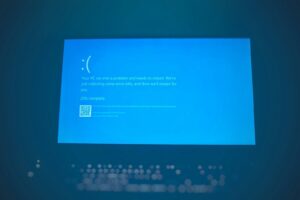
Where to get data for my machine learning project is a olot simpler. There are multiple sources You can use freely. Getting good data is usually harder than building the model itself. Without solid data on the input there is no way you wil get any decent answer. The upside of this struggle is that there’s a huge amount of public data out there ready for grabs. On the other hand of you get bad data you end up with something like below…. ( bad data beeing the memory registry … ) Remember that it is up to You to decide if the data is worth anything. Good luck 😉
If you’re working in Poland, you’re in a pretty good spot. Sources like GUS and dane.gov.pl offer reliable, structured datasets on everything from population stats to infrastructure and economics. They’re especially useful when you want real-world, local context in your models. Some systems like CEPiK go even deeper, though access there is more restricted and less plug-and-play.
Globally it is even more fun. You’ve got portals like the World Bank or Eurostat for clean, comparable data, and platforms like Kaggle or OpenML when you just want to grab something and start building.
The bigger question to ask is – what can you correlate or find out based on this data.
This list should give you a fair idea on what could You get and use.

Tips for choosing and using public data for ML/LLM
| Aspect | What to watch for | Why it matters |
|---|---|---|
| License and terms | Check licenses like CC0, CC BY, ODC-BY, or portal-specific terms; verify attribution and usage rights. | Avoid legal issues and ensure you can use the data in your project (especially commercial use). |
| Data quality and scope | Look at coverage, time range, granularity, and labeling consistency. | Poor or incomplete data will directly degrade model performance. |
| Data hygiene | Expect cleaning, deduplication, normalization, and handling missing values. | Raw public data is rarely model-ready; preprocessing is often the biggest effort. |
| Privacy and ethics | Watch for personal data, anonymization, and sensitive domains (e.g., registries like CEPiK). | Prevent legal and ethical violations, especially with user-related data. |
| Data integration | Align schemas, units, and features when combining sources (e.g., GUS + World Bank). | Inconsistent formats can break pipelines or introduce hidden errors. |
| Reproducibility | Prefer datasets with documentation, versioning, and stable access. | Makes experiments repeatable and results easier to validate or share. |
Where to get data for my machine learning project
Polish data sources
| Source | What it offers | Access | Best for |
|---|---|---|---|
| GUS (Statistics Poland) | Official statistics on population, economy, labor market, prices, education, and regional development. | Public datasets, downloadable files, and machine-readable formats such as CSV, XLSX, and API-based access. | Economic analysis, demographic research, regional studies, and time-series modeling. |
| Other Polish open data portals | Data published by ministries, local authorities, and public institutions through BIP portals and open-data platforms. | Access and licensing depend on the dataset. Many are free to use after basic cleaning and preprocessing. | General ML experiments, public-sector analysis, and domain-specific projects. |
| Geoportal / GUGiK | Orthophotos, LiDAR, terrain models, parcels, buildings, and topographic data. | Free for many core datasets. | Geospatial ML, urban analysis, mapping, and computer vision. |
| Statistics Poland APIs | REGON, TERYT, Local Data Bank, SDG indicators, transport statistics, and service data. | Free access through structured API-style endpoints. | Structured statistics, automation, and time-series analysis. |
| dane.gov.pl | Broad collection of open government datasets from many public institutions. | Free access. | General-purpose public data, reusable datasets, and quick ML prototyping. |
| gov.pl open data materials | Open resources and public-sector data published by government institutions. | Free access. | A gateway to official resources and policy-related data. |
World public data portals and datasets (global)
| Source | What it offers | Access | Best for |
|---|---|---|---|
| EU Open Data Portal | Public data from EU institutions and agencies, covering economy, environment, science, agriculture, education, and more. | Free datasets with open licenses. | Cross-country comparisons, policy analysis, and macro indicators. |
| World Bank Open Data | Global development data, indicators, and statistics. | Free, with no registration required for many datasets; exportable in CSV or Excel. | Development economics, poverty, health, education, and infrastructure planning. |
| UN Data / UNdata | Datasets from UN agencies on demographics, development, environment, trade, and related topics. | Free access, with machine-readable formats where available. | International comparisons, time-series analysis, and policy research. |
| Data.gov | U.S. government open data across many agencies, with a very large catalog. | Free download, often through CSV or JSON APIs. | Policy analysis, public health, transport, climate, and economics. |
| Data.gov.uk | UK government datasets across public services and sectors. | Free, downloadable in common formats. | City planning, social science, and environmental modeling. |
| Eurostat | Official EU statistics at country and regional level. | Free datasets, standard formats, and API access. | Comparative geography, labor, trade, and monetary indicators. |
| WHO Global Health Observatory | Global health statistics and indicators. | Free datasets, charts, and downloads. | Epidemiology, healthcare access, and public health research. |
| Google Dataset Search | Search engine for publicly available datasets across the web. | Links to datasets; licensing varies by source. | Finding niche or domain-specific datasets not hosted in one place. |
| Kaggle Datasets | Community-curated datasets across many domains. | Free for many datasets, with license notes on each one. | Benchmarking, prototyping, ML experimentation, and competitions. |
| AWS Open Data Registry | Large collections of public datasets hosted on AWS. | Free to access, though cloud transfer or compute may cost money. | Climate, genomics, earth observation, and astronomy. |
| Google Cloud Public Datasets / BigQuery Public Datasets | Curated datasets on Google Cloud, accessible through BigQuery. | Free to explore within generous free tiers; extra query costs may apply. | Large-scale analytics, NLP, and SQL-based data science. |
| Microsoft Research Open Data | Datasets from Microsoft Research across AI, vision, NLP, and more. | Free download, usually with clear usage terms. | Baseline models, transfer learning, and academic-style experiments. |
| UCI Machine Learning Repository | Classic ML datasets widely used in research and teaching. | Free download; licensing depends on the dataset. | Quick experiments, education, and model validation. |
| DataHub | Dataset hub with many public datasets and reusable data packages. | Free for many datasets; some may require login or API keys. | Multimodal data, time series, and domain-specific datasets. |
| Data.world | Data collaboration platform with open datasets and SQL/SPARQL querying. | Free tier available; licensing varies by dataset. | Data exploration, lightweight data science, and API-based ingestion. |
Specialized or niche data sources
| Source | What it offers | Access | Best for |
|---|---|---|---|
| OpenStreetMap (OSM) | Open geographic data for maps, roads, buildings, and points of interest. | Free to use; data can be downloaded or queried through APIs and exporters. | Geospatial ML, routing, urban planning, and environmental modeling. |
| NASA Earthdata / EOSDIS | Satellite imagery and remote sensing data. | Free, but subject to usage policies; large datasets may require substantial compute. | Climate research, land-use classification, and environmental monitoring. |
| NOAA Climate Data Online (CDO) | Climate and weather data for meteorology and environmental studies. | Free access through APIs and downloads. | Weather and climate models, trend analysis, and prediction systems. |
| OpenAIRE | Research outputs and datasets across many disciplines. | Open data where licenses allow. | Academic data harvesting and literature-linked datasets. |
| WIPO Data | Intellectual property statistics and patent datasets. | Some data is free; licensing varies by dataset. | Innovation analytics and market research. |
Summary
As a data engineer You don`t need to know any of that but the principles in general. Remember that bad input equals even worse output. Be precise, test data, verify and be the best QA you can be. On the other hand it is realy fun to plug that data in and i.ex correlate the amount of car accidents vs geographical region or the season. It seem obvious but still nice to get such data and see for yourself it actually works 😉
Good luck