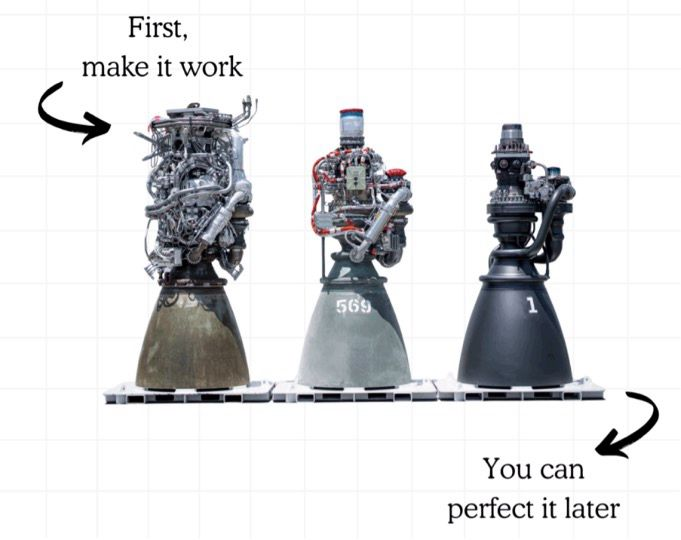
First make it work then make it better
First make it work then make it better can sound pretty straight forward and fun. You get to fast prototype something that just “works”. Glue together some pieces and see the rapid progress towards Your goal. Sounds awesome and full and dopamine.
In any kind of creative endevour a common trap is waiting for perfect results before launching anything. “First make it work then make it better” isn’t just practical advice, it’s achange in mindset that leads to real results and progress. Whether you’re an entrepreneur, developer or just a creative person. Showing up everyday, consistently, even for a bit, beats talent.
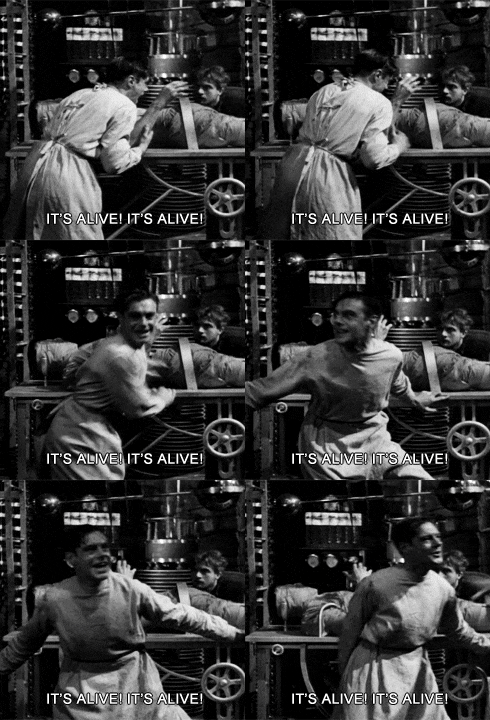
If You have trouble with that read about KAIZEN. One of the best ways to make progress. Yamato people knew what they designed.

Why “First make it work, then make it better later”
When you “first make it work, make it better later,” you focus on getting your core idea off the ground. Prototyping and early development become something existing in the real world, gathering feedback (maybe from only Your insights or some friends that are testing) and is iterating fast. Polishing from day one. Not about endless planning or diamond features before anyone uses them. It is more of a scrum iterative approach rather a waterfall ( if You know what i mean ).
- You prevent analysis paralysis and build momentum quickly.
- Small steps are easily menagable.
- Working prototypes expose technical gaps and user needs while they’re cheap and easy to address.
- Focus is on here and now, just to get to the next step.
- You can test and verify in real conditions instead of theoretizing, which provides valueable learning and growth.
Building the MVP: Make It Exist
The concept of a minimum viable product (MVP) is created by focusing on “first make it work”. Even if your initial prototype is rough, it can help provide :
- Clarify requirements for interested parties
- Highlight the most critical improvements before investing heavily.
- Keep you responsive as you validate which features truly matter.
Iterating – making it better over time
Once you will be at the “it is alive” step you unlock a feedback loop with yourself, customers, partners, and your own team. Real feedback from real users means you can “make it better later” with proper direction that is drawn by the userbase.
- Each improvement cycle sharpens your product’s quality, usability, and fit.
- You minimize wasted work and costly pivots.
- Stakeholders and investors are more likely to invest when they see consistent, visible progress
Remember that what You would like your product to be will not always be inline with the client needs.

Fight perfectionism and fear
Perfectionism is the enemy of momentum. Nike is right “Just do it”… just estimate the risk and cost first 🙂
- Helps you launch sooner and iterate smarter.
- Encourage team creativity and collaborative problem-solving
- Establish a culture of learning by doing, instead of waiting for flawless launches.
Summary
“First make it work then make it better” is a universal rule for anyone wanting to build, release, and grow something. Not necessary from ground. Start simple, ship fast, improve relentlessly — and watch your project thrive beyond the idea stage