
Markmap vs Mermaid for Spec-Driven Development (SDD)
Markmap vs Mermaid for Spec-Driven Development You will consider sooner or later. When You have to go “full on AI” documentation stops being a nice-to-have and becomes a must be part of the product. We need to convey a lot of information, with hopefully as little text as possible so we can easily read it and digest the information.
Two popular options for Markdown documentation features are Markmap and Mermaid. They solve different problems, and the best choice depends on whether you want fast idea mapping or more structured diagrams for flows.
When to use Markmap
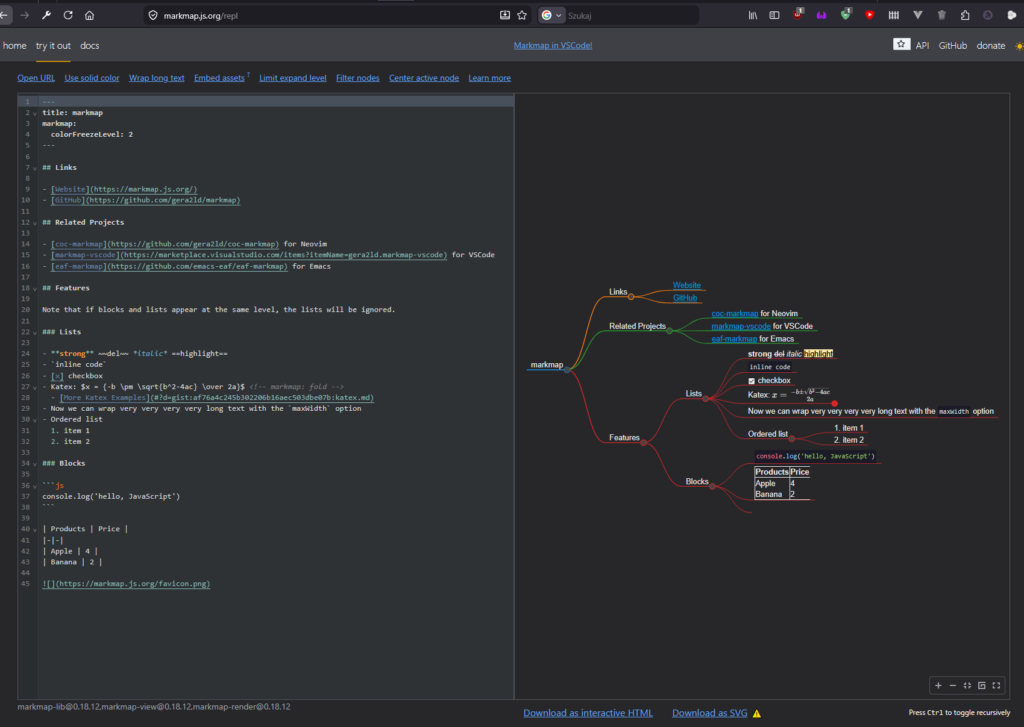
Markmap turns Markdown headings and bullet points into an interactive mind map. Useful for breaking down a feature, a system, or a specification into a visual hierarchy. It is a quick way to see the structure without redesigning the content. Works well for discovery, brainstorming, and early documentation drafts.
Markmap is simple to maintain because the source is still plain Markdown. No need for learning a separate diagram syntax. The tradeoff is that Markmap is mainly about structure, not process. It shows how ideas are organized, but it does not describe flows, states, or relationships as precisely as a proper diagram tool.
When to use Mermaid
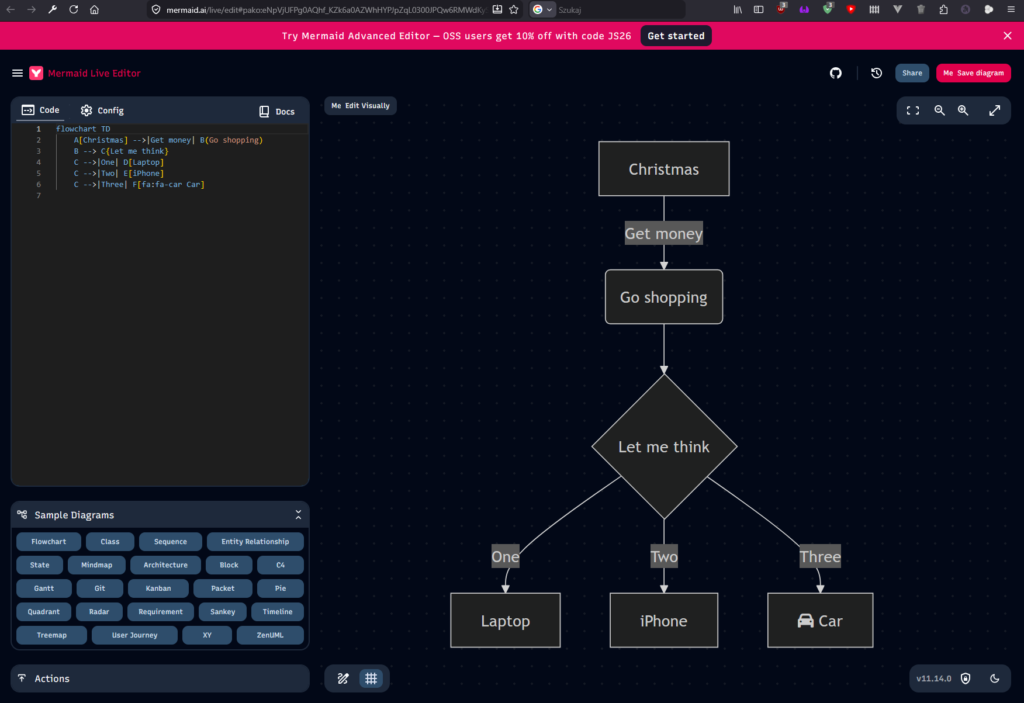
Mermaid is better suited for logic diagrams. It can represent sequence diagrams, flowcharts, state diagrams, class diagrams and etc. It is a better fit for technical docs for better understanding how systems behave, not just how topics are grouped. It can make a difference between “nice overview” and “actually useful.”
Mermaid is also supported in Markdown documentation systems. The downside is that Mermaid requires more care. The syntax is still readable, but it is less forgiving than a simple outline. If the team wants quick edits from non-technical writers or product people, Mermaid can feel heavier.
Different strokes for different… specs
Software specifications is a mix of Markmap style outline for scope, goals and edge cases and then use Mermaid for user flows, API interactions, deployment logic. Specification should be / could be alive.
If the documentation format is too rigid, people stop updating it. If it is too loose, it becomes hard to trust. The best setup is usually the one that keeps maintenance low while still making the important parts easy to understand.
Markmap helps people see the shape of the document, while Mermaid helps them see the shape of the system.

Why not both ?
For many teams, the real answer is not “either/or.” It is to use both in the same documentation workflow. Markmap works well for the top-level spec, while Mermaid handles the technical details inside it. That gives readers a simpler entry point and still leaves room for precision where it matters.
Practical Workflow
A good pattern is to write the spec in Markdown first, then decide where visuals add value. Use headings and bullet points for the basic structure. Add Markmap when you want a fast overview. Add Mermaid when the document needs a more exact diagram. That keeps the docs readable for humans and still useful for engineers.
This also helps with collaboration. People can review the Markdown text without opening a diagram editor, and the diagrams can stay embedded in the same file or documentation system. That reduces friction, which is usually the difference between documentation that survives and documentation that gets abandoned.
Read more


