Dead horse meaning
The “Dead Horse Problem” is a metaphorical concept describing human tendency to persist in failing efforts or unproductive work rather than acknowledge their shortcomings and change course. The phrase is often attributed to an old Native American saying from the Dakota tribe: “When you find that you are riding a dead horse, the best strategy is to dismount.” Despite the obviousness of the situation (the horse is dead), people and organizations often stick with ineffective strategies, investing more resources, energy, and/or time, hoping for a turnaround that never comes. This metaphor captures refusal to accept reality and continue with doomed projects, relationships, or plans This is leading to wasted effort and frustration. This is tightly coupled with the Sunk Cost Fallacy issue we are all facing quite often.
TLDR;
ADMITTING A PROBLEM IS NOT A SIGN OF WEAKNESS
Yes it hurts our ego but we are way better with beeing humble and a dose of humility never goes sour.

When the dead horse is dead
Psychologically, the Dead Horse Problem arises with several intertwined biases and defense mechanisms:
- Sunk Costs Bias: People feel compelled to continue because of the resources they have already invested, fearing those are wasted otherwise.
- Loss Aversion: Humans experience the pain of loss more intensely than the pleasure of gain, causing resistance to let go of familiar but failing situations.
- Denial: Facing painful realities triggers denial to shield oneself from emotional discomfort.
- Fear of Failure and Social Pressure: Admitting failure can feel like a personal defeat or social stigma, particularly in cultures that emphasize success.
How do we try and revive a dead horse
- Change the jockey, not the horse: We blame leadership and shuffle people around, hoping a new leader can somehow make a broken system work.
- Form committees and task forces: We create elaborate rituals of analysis and discussion, endlessly studying a problem whose solution is already clear: let it go.
- Invest in a new saddle: We spend money on flashy new tools or training, thinking a fresh coat of paint will make a failing strategy productive again.
- Redefine what “dead” means: In the most extreme cases, we twist language and logic to convince ourselves that the problem isn’t a problem at all.

This kind of denial isn’t just wasteful; it’s a trap. It blinds us to new opportunities and locks us into a cycle of frustration, stagnation, and wasted potential.
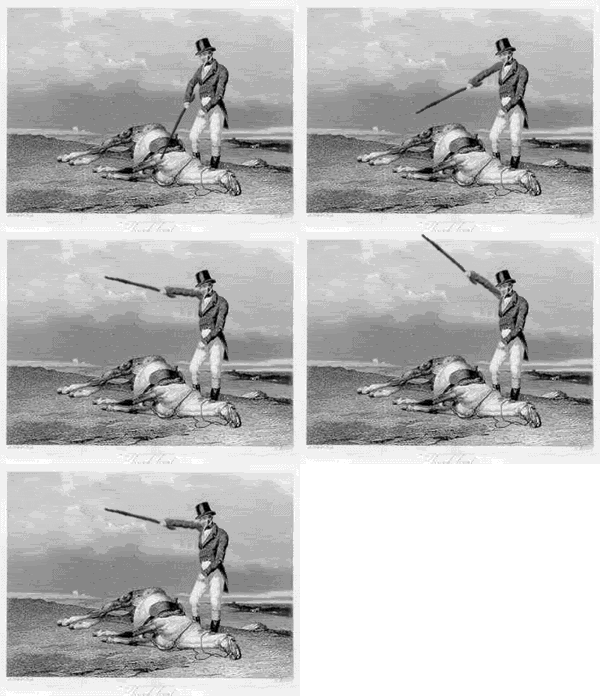
How to avoid the dead horse
Avoiding the Dead Horse Problem involves self-awareness, usually a painfull intro and retro-spective. Some proactive strategies such as:
- Regularly evaluating if current approaches and efforts are effective and being willing to pivot or stop when they are not.
- Learning from others’ experiences and being open to new ideas and methods.
- Cultivating flexibility and a growth mindset to embrace change.
- Recognizing cognitive biases and emotional attachments that cloud judgment.
To deal with the Dead Horse Problem psychologically, acknowledging the emotional difficulty in letting go is crucial. Practice acceptance of reality, seek support, reframe failure as learning (despite how well education system trained us to do otherwise, unlearn), and focus on future possibilities rather than past losses.

Dead horse problem summary
The Dead Horse Problem illustrates how people persist with failing efforts due to psychological biases like sunk cost fallacy, loss aversion, and denial. Originating from a Native American metaphor, it warns against clinging to unproductive paths. By regularly assessing effectiveness, embracing change, and managing emotional barriers, one can avoid or resolve this trap and redirect efforts toward more fruitful outcomes.The “Dead Horse Problem” is a metaphor originating from a Native American saying, “When you find that you are riding a dead horse, the best strategy is to dismount.” It describes how individuals, organizations, or societies continue to invest time, energy, and resources in failed or ineffective endeavors instead of accepting reality and moving on. This behavior involves insisting on solutions that do not work and avoiding the clear fact that the “horse is dead,” leading to wasted effort and stagnation
Dealing with the problem involves acknowledging emotions tied to failure, practicing acceptance, reframing setbacks as learning opportunities, and seeking support to transition away from unproductive paths.
In summary, the Dead Horse Problem warns against the human tendency to persist in doomed efforts due to cognitive biases and emotional resistance. The best strategy is to recognize when a project or situation is failing and make the difficult but necessary decision to stop, thereby freeing resources to pursue more promising endeavors.