Psychology
-
Productive struggle vs AI slop
Productive struggle vs AI slop is quite the topic these days. On one hand we have to do the hard, boring, frustrating work. Do it long enough to learn the whole lot, reshape skills, gain confidence. Opposition of escaping to quick fixes with or without AI. When used in conjuction with AI, we should still keep the struggle but without the pointless friction. That way more energy and cognitive power goes into craft and progress, long-term growth… instead of refactoring some legacy code and working over things that should not be that hard in the first place. What is productive struggle? Productive struggle is the time and space where a…
-
What Jack Oneill teaches us about efficiency
What Jack Oneill teaches us about efficiency, underneath his sarcasm, is ruthlessly practical. Listening to Jack You can easily figure out the most important things to do simple… efficient… are : Jacks worldview reminds us that intelligence isn’t just about knowing, it is rather wisdom anyway, but more so it is about acting clearly in the face of confusion. In a world rewarding complexity, that kind of simplicity is both rebellious and profound. Colonel (later General) Jack O’Neill ( two Ls) from Stargate SG‑1 is remembered for his sarcasm and not liking scientists. Beneat dry humor lies, a surprisingly deep, wisdom rooted in simplicity, straight talk, and cutting through noise…
-
Losada coefficient at life and work
The Losada coefficient at life and work is pretty much the same theory. Also known as Losada ratio or critical positivity ratio. Proposes a fixed ration between positive and negative interactions / emotions. Supposedly distinguishes positive from negative individuals or teams.We should have proportionally MORE POSITIVE INTERACTIONS so in the long run we will be happy.Originated in 2005 paper by psychologists Barbara Fredrickson and Marcial Losada, who calculated a threshold of ~2.9:1 and upper? limit around 11.6:1 Losada ratio in coportate In highly skilled IT software development teams ( or any other team for that matter) this balance shows up in code reviews, stand‑ups, meetings, emails, design discussions and production…
-
5 why methodology
5 why methodology is one of my favorites. Simple, easy to remember and always work. If You are not at Your root cause just ask… yet again… Why ! Remember when you burned that pork chop in the kitchen last time and instead of blaming the recipe, you dug deeper? “Why did it burn? Fire too high. Why? Didn’t check the stove. Why? Rushed after back to the pc…” Boom! You found the reason. Do not ever leav e a frying pan unattended or start using a timer. That’s 5 whys methodology in action, a powerhouse technique from Toyota smashing problems and stripping the mystery Basics to remember 5 Why…
-
How to check if Your email and password was leaked
Why You need a strong passwords and check if it was breached How to check if Your email and password was leaked ? Just check the security blogs or institutions like https://databreach.com/. Google the title of this blog post. Fix your breached credentials or You will be sorry ! Passwords are Your first line of defense. Multiple factor authentication (MFA) like sms, email verification or authentication application should also be something You do! How to make a good password ? Many different ways to make it happend. I would recommend to consider : This is a simple algorith You can use to remember all of those passwords and every one…
-
First make it work then make it better
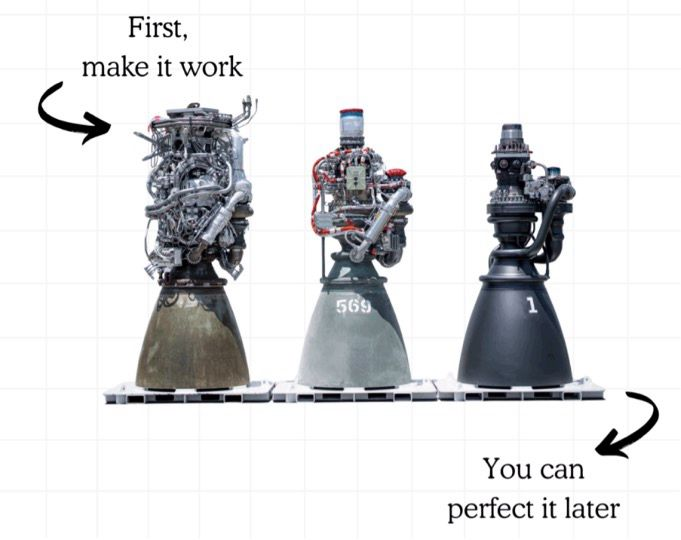
First make it work then make it better can sound pretty straight forward and fun. You get to fast prototype something that just “works”. Glue together some pieces and see the rapid progress towards Your goal. Sounds awesome and full and dopamine. In any kind of creative endevour a common trap is waiting for perfect results before launching anything. “First make it work then make it better” isn’t just practical advice, it’s achange in mindset that leads to real results and progress. Whether you’re an entrepreneur, developer or just a creative person. Showing up everyday, consistently, even for a bit, beats talent. If You have trouble with that read about…
-
Why people do not use Dvorak
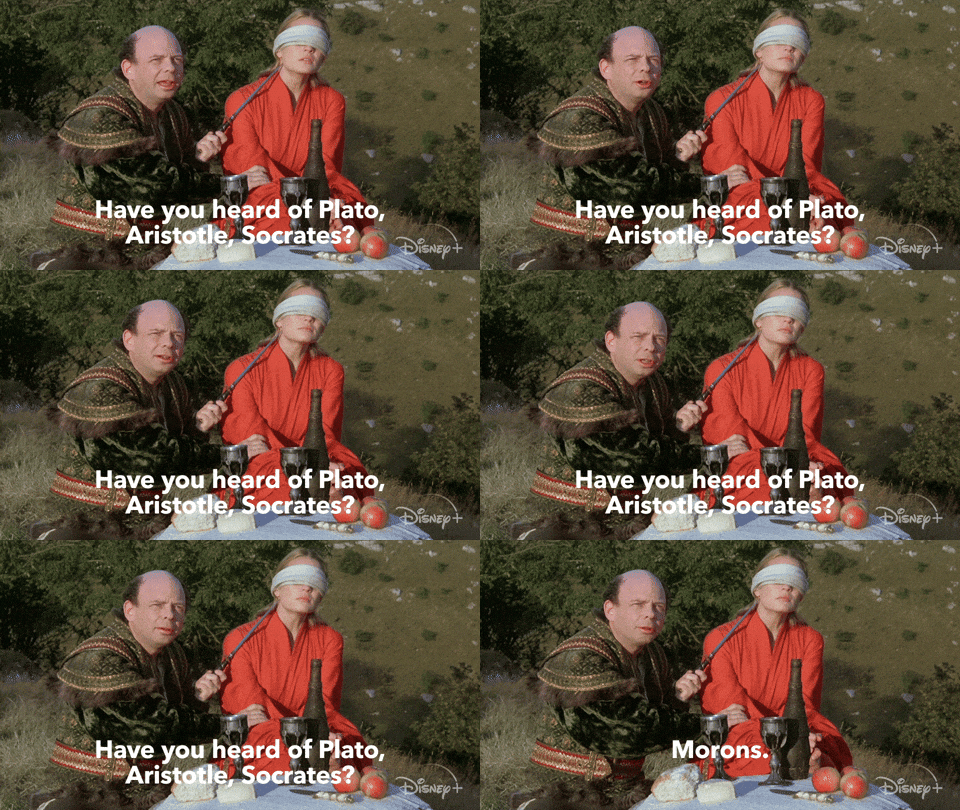
Why people do not use Dvorak ? People are stubborn and do NOT LIKE CHANGE. tldr;) People’s stubbornness and environmental factors significantly hinder the adoption of superior systems, as shown by the example of the Dvorak keyboard layout. Dvorak’s design was intended to reduce finger movement, increase typing speed, and reduce fatigue—placing the most frequently used letters on the home row. Sounds cool and sensible ? Because it is. However… Its adoption never came to be. The traditional QWERTY layout still is the established standard, compatibility with existing shortcuts and the high cost in effort and time to retrain millions meant people stuck with what they knew despite evidence that…
-
How to get a QR code idea
How to get a QR code idea ? Taking breaks and relaxing is essential for creativity. Masahiro Hara invented the QR code not by working overtime, but while enjoying a simple game of Go. Watching the stones on the board he had an epiphany… a new way to organize information. A simple graphic design. Digital. Coded. It lead him to the invention of a tool that changed the world. The QR CODE. Hara’s story shows that the best ideas often come when the mind is at ease. Instead of forcing solutions, enjoying moments of calm can help new connections form naturally. These quiet times help the brain see things differently.…
-
My personal Dead framework for decision clarity.
The Dead Framework: A Simple Way to Make Meaningful Decisions Dead framework helps me with my life full of choices, big and small. Needing to make constant decisions, I / we often wonder if we are making the right one and fall under the “grass is greener…” bias. Making any decision i would like for it to lead to growth and make me not regrets. It is my simple personal decision-making method I call the Dead Framework. I use it to make decision that will build me something to last as long as possible. Dead Framework two important questions If both answers are yes, then the decision is worth pursuing…
-
10-10-10 rule and 5 simple guides
The 10-10-10 Rule – simple and easy framework for better decisions Making decisions—whether big or small—can often feel overwhelming. We worry about the immediate consequences but sometimes overlook the longer-term impact, leading to choices we later regret. The 10-10-10 Rule is a powerful decision-making tool designed to bring clarity and perspective by evaluating the effects of any decision across three time horizons: 10 minutes, 10 months, and 10 years. What Is the 10-10-10 Rule? Popularized by author Suzy Welch in her book 10-10-10: A Life-Transforming Idea, this framework encourages reflecting on how a choice will affect your life in the next: By consciously considering all three time frames, the 10-10-10…